Gravity Series
Why do things fall, why does the Moon stay in orbit, and why do we feel weight while standing still? These 11 lessons build one connected explanation, starting with everyday motion and working towards Einstein’s description of gravity. Each visualisation gives you something to explore as the explanation develops. Follow the main lessons in order. Optional side quests explore related questions and alternative ways of picturing the same ideas.
Motion and falling
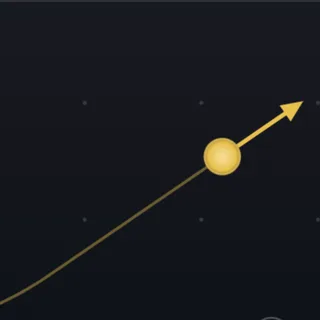
Force and motion
A force can change an object’s speed or direction. Explore why moving steadily needs no continuing push, and why turning does.
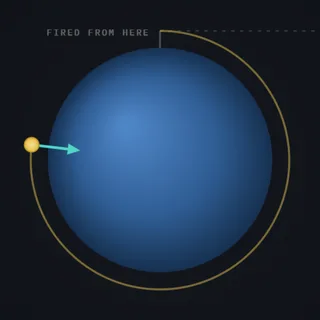
Falling and orbiting
An orbit combines free fall with sideways motion. Gravity continually changes the direction of travel, allowing an object to keep moving around a planet.
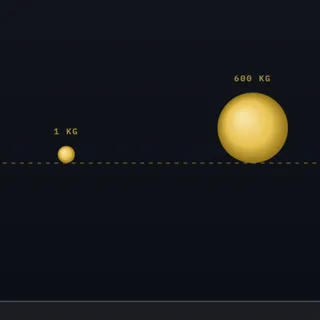
Why heavy and light objects fall together
A heavier object experiences a stronger gravitational force, but it also takes more force to accelerate it. Without air resistance, objects released together have the same acceleration.
From free fall to spacetime
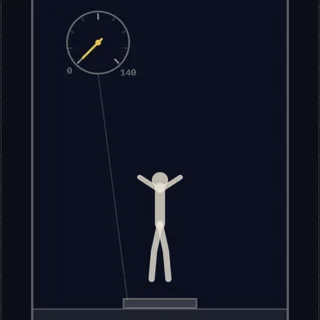
What a scale measures
A bathroom scale measures the supporting force beneath you. In free fall that support disappears, so the scale reads zero even where gravity is strong.
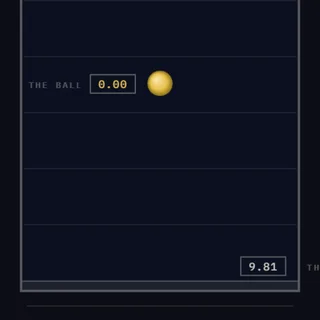
Free fall and acceleration
A falling object accelerates relative to the ground, yet an accelerometer falling with it reads zero. These measurements describe different aspects of its motion.
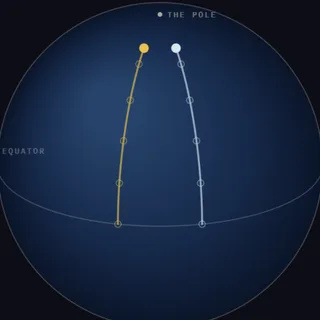
How free-fall paths reveal curvature
Two freely falling objects can accelerate relative to one another while both accelerometers read zero. In general relativity, these tidal effects reveal spacetime curvature.
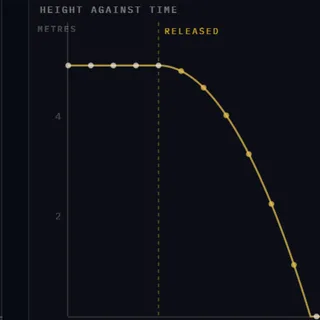
How spacetime describes a fall
A stone resting on a table and a stone falling beside it follow different paths through spacetime. Comparing those paths helps explain what gravity’s geometry means for an individual object.
Measuring gravity and bringing it together
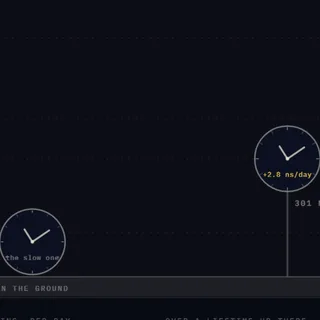
Clocks at different heights
Near Earth, a clock held higher up runs slightly faster than one held lower down. Atomic clocks can measure the difference across the height of a shelf.
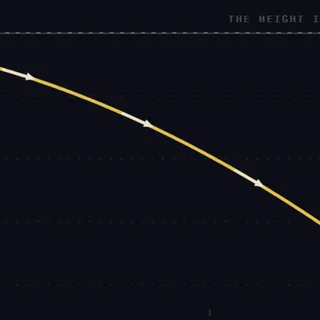
How clock rates connect with falling
Clocks held lower down run slower, and released objects fall downwards. An accelerating rocket helps us understand how these two observations are connected.
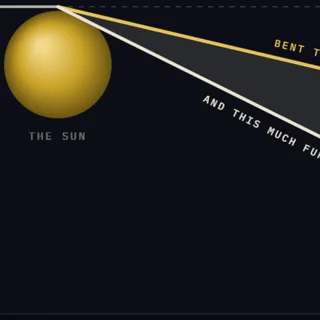
How spatial geometry affects light
Clock-rate differences give a good description of a slow fall near Earth. Light passing the Sun lets us test the parts of spacetime geometry that this approximation leaves out.
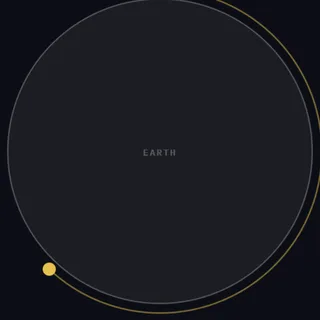
Putting gravity together
Falling objects, orbiting satellites, supporting floors and clocks at different heights all fit into one description of gravity. We can bring the ideas together by looking at the same Earth in each case.
Optional side quests
Related questions, and other ways of picturing the same ideas. None of the main lessons depends on them.
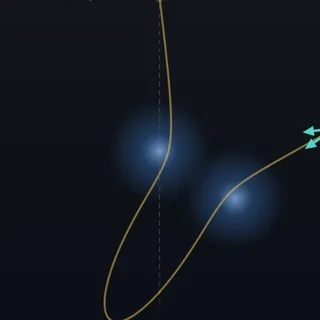
Where orbital motion comes from
Planets form from gas and dust already moving around a young star. To understand their orbital motion, we can follow that material back to the cloud it came from.
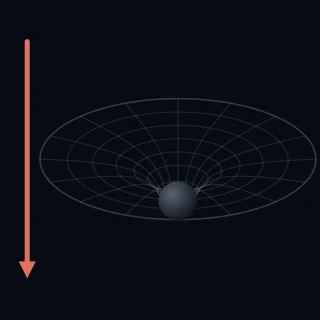
The rubber-sheet picture
The rubber-sheet demonstration gives us a visible picture of curved paths. To use it as a guide to gravity, we need to understand which parts of the picture carry over.
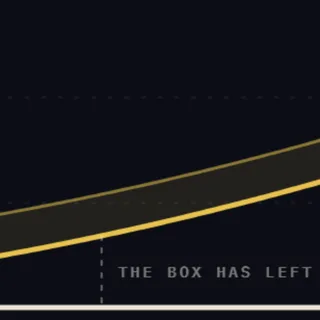
Clocks and falling
Comparing clocks at different heights helps us understand falling. This companion post looks more closely at what that comparison tells us, and where some familiar analogies become misleading.
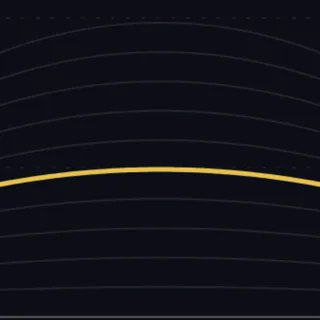
Free fall and elapsed time
Clocks taking different routes between the same two events can record different amounts of time. Comparing those readings gives another way to understand free fall.
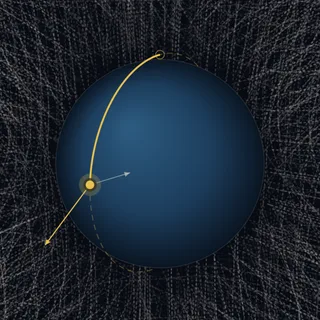
Standing still among falling paths
Imagine watching a stream of freely falling objects pass you. Their motion provides a useful reference for comparing a stone held above the ground, dropped from rest or launched into orbit.
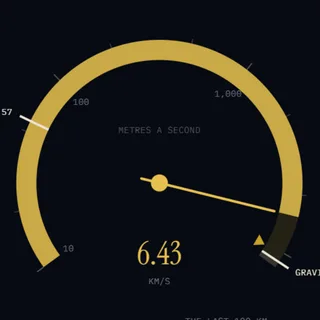
How fast can something fall?
How fast an object falls depends on where it starts and what it falls through. Compare an ideal fall without air with a descent through Earth’s atmosphere.